Great bikes under £1500: the bg winter hack directory.
For years now, I’ve been buying a cheap bike every autumn and selling on in early summer. Play your cards right and you can sell on in the spring, covering the cost of the machine and running it over the winter, while sparing the other bike the indignities of climate and the council gritter. Then there’s the bonus of experiencing a whole range of different riding experiences, and more often than not they’ll be good ones: sticking to a few ground rules is massively helpful in this regard. £1500 was (and remains) my absolute limit: wherever possible I try to buy for under a grand, not as easy in 2019 than in 2011 when this guide first appeared. Avoid anything which is going to tempt you into extensive modding: allow for basic consumables only. Absolutely avoid anything which has a whiff of project about it – past, present or future. Always remember what the bike owes you in total, because that is the figure you’ll need to top next season to make this work.
How come you can apply the word ‘great’ to any motorcycle costing that kind of money? Some bikes were disappointing sellers to begin with, seeing a massive value drop within a year of first purchase, way beyond normal deflation. But first impressions can be very misleading. A number of bikes which had a lukewarm initial reception and poor sales have been the subject of cult revisionism, either because of associated cheap resale value (see the YZF 1000 below), or because people belatedly realised that they were actually very good bikes, or both – like the RC 31 (below) or the TRX / TDM 850s. They are still affordable enough to be on the list. Others were great from the start, and so many produced that commonality drove used prices down: FZS Fazers, CB 500s. Thus both poor sellers and massive sellers alike provide fertile ground for future hacking opportunities, and both sectors yielded great machines. Cheapness is of itself not a good enough reason to get involved, because this is not simply a business proposition. There must be serious fun potential, and the machine must retain a residue of that indefinable element – class.
So, always being mindful of extreme fiscal constraint, we proudly present this year’s potential hacks. We’ve categorised them to suit individual requirements.
ROADSTER HACKS

HONDA 650 BROS RC31 (1988-1993 in UK, replaced by NTV 650)
” An unmitigated sales disaster” : words that warm the value hunter’s heart. Such was this bike described by American Motorcyclist Magazine, looking back at the less than distinguished showroom tenure of the Bros, known as the Hawk in the USA. The uninitiated confuse the bike with the later, steel framed, shaft driven Reverre (NTV) version beloved of couriers. Wearing clothes, the Reverre devolved into the Deauville, and that uninspiring family tree family tree is another reason for the Bros’s shyness on the market.
But what a gem of a bike the original is. Gull armed (under licence from ELF), ally twin spar frame, 165 kilos dry… and a V2. There was inevitably a Japanese 400 variant which saved just 5 kilos, but the ambitious can get more than the 57 horses (crank) on the 650 spec sheet. The Africa Twin 750 lump drops in, and liberated by the lack of weight in its slim new home can be tuned up nicely. We’ve heard of Japanese Bros 900s…
+ robust motor, sweet handling, unique looks.
– being old skool, it has a relatively long wheelbase and lower riding position than would be the case if it had been made in Italy, yesterday. In which case it would also be a bit more pricey… just give it a bit more ride input than a Tuono…
YAMAHA SRX 600 (85-97)
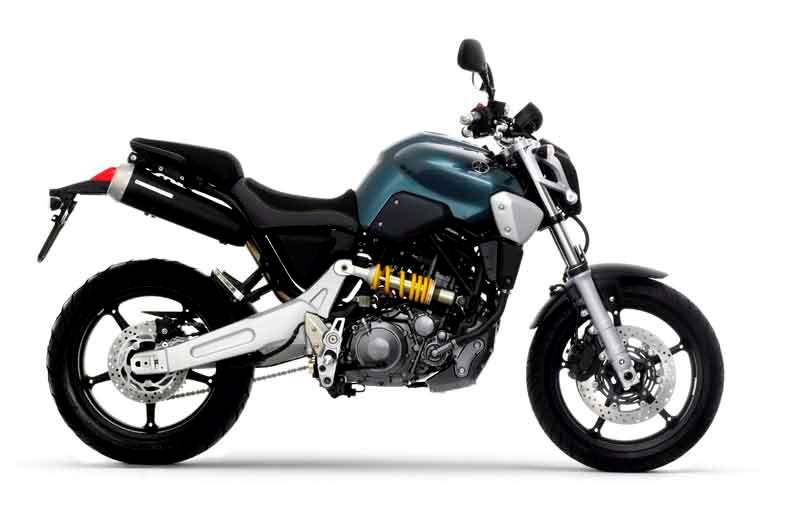
A roadster with cafe racer overtones based on the XT600 motor. Less muscular than the Bros and can be found for similar money – an acceptable, less glamorous, alternative. The SRX was itself the successor to the SR500 utilising the classic XT500 lump with electronic ignition (but still kick start). You wont find an XT500 in bits for under £1500, but SRs have been known to sell very cheap. The 500 air-cooled motor was Yamaha’s highly effective take on a Brit single. However, the 600 is far better suited to the world of hack, being cheaper and easy to maintain. Yamaha tried turning the XT motor into another roadster, the 660 variant powering the noughties MT 03, which is future hack material but just outside our self imposed budgetary constraint.
TRAIL HACK

SUZUKI DR650 mk2 (1996 2004)
This is one of green laning’s best kept secrets, solely because the 1996 onward version weighs in at 145kgs dry – a massive 30 kilos lighter than previous edition, which made a hitherto slightly bland trail bike come to life. The DR650 motor ended up in a variety of guises – the CCM R30 supermoto being one example – but is at its best where it belongs, in this massively under rated and capable trail bike. It’s a fantastic winter ride courtesy of its trailie geometry, long travel suspension and big single, combining to give smooth traction and high visibility on winter roads. And the weight loss means its manageable off piste, if not in competition winning territory. Terrific value, far more so than DR 400s, and much gruntier. Recommended urban conveyance.
+ For a winter hack, it has pretty much everything you require.
– Long travel suspension needs to be maintained and is often neglected. Giving the suspenders a freshen up will also mean you can tune it according to proposed use – i.e. mainly on or off road.
Our trailie hack choice by a distance.
MUSCLE HACK

SUZUKI GSF 1200 BANDIT mk 1 (95, 96)
Often damned with faint praise for no better reason than it’s commonality, the mk1 1200 naked is the Bandit to have. Later B12s got longer, wider and fatter. The fact that many Bandits were tastelessly modified is also no reason to abandon the genre if value and fun are high on the agenda, and the mk1 was the most fun. Get as standard an example as possible and do what you want with it – look carefully (there’s no shortage) and you’ll have plenty of change from £1500.
+ unburstable lump is understressed as standard, will take plenty of tuning as required
– none really from a hack perspective, the standard zorst system weight a fair bit but thats about it
TOURING HACKS

Fly boys drop the 5 valve FZR EXUP chunderarse motor into the YZF 750 frame, but in truth the Ace is a much better touring bike in its original and supposedly unlovely guise. Menaced by ZZRs and Blackbirds as a tourer, and hustled by R1s on the track, the Ace sits bang in the middle of an identity crisis. And it’s not such a bad place to be. It’s a proper old style superbike, long and low. In standard guise you’re looking at mid 140 brake (crank), and surprisingly, the bike weighs in nearly 35 kgs lighter than the ZZR, which may account for its reputedly superior handling : the Ace was always more of a purists ride than the big Kwak for that reason. Power output is similar, the Kwak having the edge at the top end, but the Ace feels gruntier. And then the Blackbird flew over the hill, making more power than either, but still giving nearly 30 kilos to the Ace. Hacks are not usually called upon for continent crossing, but if you want an ICBM for around £1200, the Ace is the most likely contender.
+ velvet smooth motor , lighter than a ZZR 1100, handles better
– just lacks the ZZR 11’s screaming top end, but not by much
KAWASAKI ZX9 C (98,99)
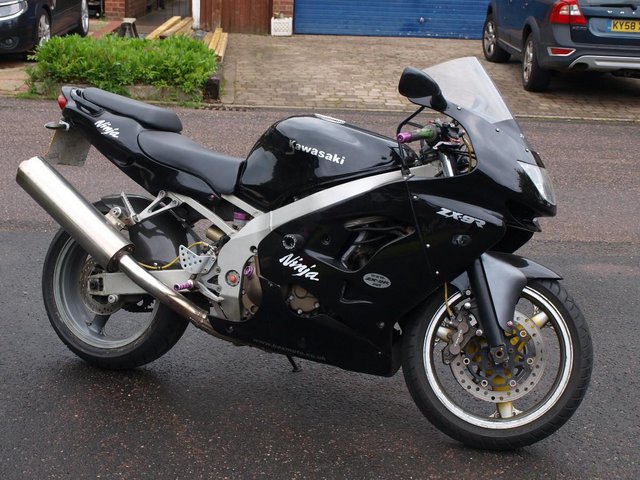
Forget the pre 98 ZX9s (frankly a bit of a big dog’s breakfast bar the motor) and for the moment the y2k onwards (because they’re still a bit over £1500), but the C is in our Goldilocks zone. Conceived as a sportsbike, reality turned the 9 into a great tourer: comfortable, decent handling, and very, very fast. One of Kawasaki’s proper legendary motors, and the basis for the later generation Z1000, SX, Versys and so on. But this incarnation of the lump is the daddy. Maybe hang until December / January and find an E for £1500?
+ Speed, comfort.
– E/F versions (y2k on) have better lights and are more precise handling, £1500 examples by December…
SPORTSBIKE HACK

SUZUKI GSXR750 SRAD 1996 – 99
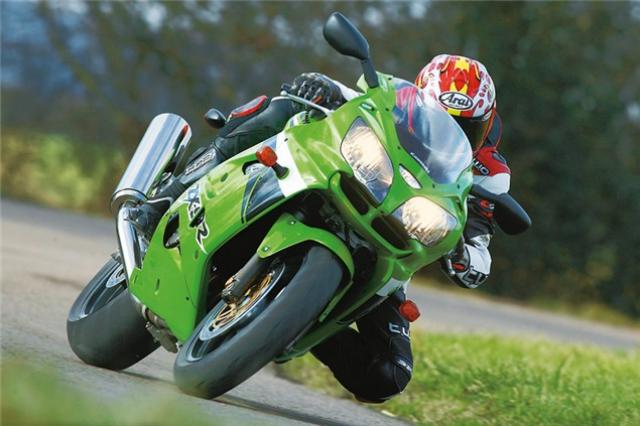
SUZUKI GSXR 750 Y2K 00 – 03 (above)
Although a number of decent post 92 sportsbikes are dropping into hack price territory – the ZX9C, early Blades – the SRAD is in our opinion the one to go for. Clean early 750s are beginning to earn the dreaded Classic label, leading up to 96 Suzuki lost their way with the bike. The 96 SRAD put things back on track, weighing under 180 kilos dry. The 2K model is even better.
Between 96 and 99 saw the introduction of FI, but the 96 template remained the same. We’d go for as late a one as possible. If you can find a reasonable y2k model – the first major post SRAD redesign – for £1500 in reasonable nick, buy it. The massive slump in sportsbike sales, the overall financial context, and the onset of winter may well combine to bring the bike just within out grasp. As good as the SRAD is, the 2000 bike moved things on to a different plane.
+ More useful on the road than the 600s, cheaper than same year 1000s.
– Rear shock may need a refresh / service (par for the hack course)

YAMAHA TRX850 (1996-2000)
Yamaha’s take on the Ducati 900SS. That means a milder version of the trad Ducati sports ride position mated to a TDM 850 motor via a steel trellis frame. And that means the gearbox is the achilles heel: they tend to be either sweet or harsh, and stay that way. A test ride is absolutely essential. They’ve been seen for as little as £500, but if anything they are beginning to wander upwards in price. The 270 degree crank and firing give the parallel twin a V2 feel with less vibes and contributes to the sweet handling (big bang firing order) – assuming the suspension has held up. Comparable to an SV650S, but way better looking (and a bit heavier, 190 kilos dry). Essentially a road bike for the twisties.
+ looks, handling, character
– gearbox if you are unlucky, beginning to edge up in price.
WORKHORSE HACKS
Most of these are likely to be well known to be Bg visitors so briefly:
HONDA CB 500 (94 – 03)
Still the cheapest bang for the buck. The ur-hack. Plenty of parts, plenty of fun.
YAMAHA FZS600 FAZER (98 – 04)
Re-tuned Thundercat motor is a honey, better on road in every single respect than it’s R6 derived replacement. Buy the last generation of FZS 600 (03 on) which used the Fazer thou’s front fairing and lamps – the lenses on early Fazer 600s are just too small to work properly, even on full beam. We like ’em because they’re much greater than the sum of their parts, and we like their eccentric looks. Can be had for a grand. Nurse the suspension, hope for decent rubber, and the bike will outhandle later generations of Fazer 6s into the bargain. It’s unlikely, but if you’re paranoid, test ride for gear jumping.
YAMAHA DIVERSION 900
Shaft driven mile muncher with handsome, indestructible heirloom, of an air cooled lump. Comfortable, overweight, low maintenance and bullet proof. The bike you are most likely to see with 100,000 plus miles. Long distance courier favourite. For both reasons, low mileage examples are rare.
KAWASAKI ZZR 600 (1990 – 2007)
Way more comfortable than a ZX6 with a top speed to match it. Chronically undevalued and ignored since it had the misfortune to appear at the dawn of the modern sportsbike era, and as such seemed dated in comparison – which has been good news for value hunters ever since. The only real issue is that the damping goes missing fore and aft, but many now have aftermarket shocks in situ and heavier fork oil does the job up top. Vies with the Divvy (above) for cheapest touring hack.
HONDA VFR750 RC36 (94-97)
Is putting this into the workhorse category an insult or the best kind of compliment? It takes a very special bike to gain the core kind of respect that goes with very high mileage capability. The VFR accomplishes this in style. The 90-93 version could be had for pocket money: this was the bike that was my last winter hack. It cost £600 and never missed a beat. However, all post 90 VFR’s are heavier than they should be, courtesy of that single sided swinger. The 94-97 VFR is our preferred model because it lost some of it’s predecessor’s weight, but still remains over 200 kilos dry. If only… Still, we prefer it to the later 800 which gained unnecessary linked brakes and eventually lost those whistling gear driven cams (except for the first 800 which is outside our price range). That apart, there is nothing we can add to the many words expended on the subject of VFRs. If the top end whispers on idle, don’t be afraid of high mileage.
SUZUKI SV650N
Naked SVs tend to be cheaper than their faired brothers, and since we’re not talking massive power there is little reason to buy the plastics unless you are doing the odd track day or high miles. Suzuki got it spot on with smaller SV, it works and it handles. After all, it’s a lightweight V2, and there is very little to dislike about that concept. Don’t let the dismissive ‘girl’s bike’ tag put you off although it feels even better to shorter, lighter pilots It simply means the SV has a lowish saddle height. Big fun for little money. Grunty for a 650, and very capable in the bends. Suspension may need help.
FUTURE HACKS
The two referred to above: